
November 26, 2026
6 min
Influencer Marketing for Businesses in Saudi Arabia: How to Build a Successful Campaign
Written by Sanad Platform Team
Your campaign may generate thousands of views, but how do you know whether those views reach the right customers and contribute to business results? Successful influencer marketing takes more than choosing a popular account. It requires clear objectives, relevant content creators, and consistent performance tracking. The Sanad platform helps businesses discover creators with AI-powered search, organize collaborations, and monitor campaign performance and sales in one place, supporting better marketing decisions.
What Is Influencer Marketing?
Influencer marketing is a business collaboration between a brand and content creators who introduce its products or services to their audiences.
Businesses use creators’ content styles and audience relationships to reach potential customers, increase brand awareness, and support sales.
Why Should Businesses Use Influencer Marketing?
Influencer marketing helps businesses reach new audiences through content that matches their interests and behavior on social platforms.
According to Saudi Arabia’s General Authority for Statistics, 96.2% of internet users aged 15–74 in Saudi Arabia used social media in 2025, highlighting the importance of social platforms for businesses targeting Saudi consumers.
Common business objectives include:
Increasing brand and product awareness.
Reaching new potential customers.
Presenting products through practical content and experiences.
Generating store visits and purchase opportunities.
Creating marketing content for use under agreed usage rights.
For example, a Saudi perfume store could collaborate with a fragrance creator to demonstrate a new product instead of relying only on a traditional advertisement.
What Are the Main Types of Influencer Marketing Campaigns?
Campaign types depend on the business objective and product:
Brand Awareness Campaigns: Increase brand visibility and introduce the business to new audiences.
Product Launch Campaigns: Present a new product and explain its features and use.
Traffic and Sales Campaigns: Use tracking links and discount codes to support measurable actions.
UGC Campaigns: Obtain product-related content for use under agreed terms.
Long-Term Partnerships: Build ongoing relationships with creators who fit the brand.
How to Choose the Right Influencer for Your Brand
Follower count alone is not enough to make a decision. Businesses should review:
Audience Fit: Does the creator reach people similar to the store’s target customers?
Specialization: Does the creator’s content match the product category?
Engagement Quality: Is audience interaction relevant to the content and audience?
Geographic Reach: Does the creator reach customers in the locations the business targets?
Content Style: Can the creator present the product in a way that fits the brand?
For example, a fashion store targeting Riyadh and Jeddah should review the creator’s audience locations, not just the account’s follower count.
Businesses should also verify that influencers hold a valid Mawthooq advertising license when required under Saudi advertising regulations before entering into a collaboration.
For a more detailed approach, explore our guide on how to choose the right influencer for your brand.
How to Set Clear Influencer Campaign Objectives
Before contacting creators, businesses should define what they want the campaign to achieve.
Objectives may include:
Awareness: Increase reach and impressions.
Engagement: Encourage audience interaction.
Traffic: Bring qualified visitors to the online store.
Sales: Generate trackable orders.
Content: Produce marketing assets for use under agreed terms.
Each objective needs relevant performance indicators.
An awareness campaign should not be evaluated only by sales, just as a sales campaign
should not be judged by views alone.
What Are the Steps to Planning a Successful Influencer Campaign?
Businesses can organize campaign planning into six steps:
Define the objective and audience: Identify the intended result and target customers.
Select content creators: Compare their specialization, audience, and engagement quality.
Set the budget: Allocate costs for collaborations, production, samples, and promotion.
Prepare the campaign brief: Define the message, deliverables, publishing dates, and usage rights.
Set up tracking: Assign links and discount codes when needed to connect results with the campaign.
Monitor and evaluate: Review execution and results, then identify areas for improvement.To allocate campaign costs effectively and avoid unexpected expenses, explore our guide to influencer marketing budget planning before launching your campaign.
How to Choose the Right Platform for Your Target Audience
No single platform works for every business. The choice depends on where the target audience is active, the content format, and the campaign objective.
TikTok: Useful for short-form content, product discovery, and testing creative ideas.
Instagram: Suitable for visual content, product presentation, and brand presence.
Snapchat: Can support campaigns targeting audiences who regularly use the platform.
YouTube: Suitable for detailed reviews, explanations, and longer product experiences.
X: May fit campaigns built around discussions and topic-specific communities.
For example, a Saudi specialty coffee store could use short videos to demonstrate preparation methods.A technology store may need detailed product reviews to explain features and comparisons.
How to Measure Influencer Marketing Campaign Results
Start with metrics that match the campaign objective:
Reach and Impressions: Measure content exposure.
Engagement Rate: Measures audience interaction.
Clicks and CTR: Measure traffic generated by content.
Conversion Rate: Measures the percentage of visits that result in orders.
CPA and CAC: Measure the cost per order and new customer acquisition.
ROAS and ROI: Help evaluate revenue and financial returns.
UTM links, discount codes, and store data can help connect visits and orders to their sources. The attribution method should be defined before launch.
For a practical breakdown, see our guide to influencer campaign performance measurement.
What Common Influencer Marketing Mistakes Should Businesses Avoid?
Choosing creators based only on follower count.
Launching campaigns without clear objectives or KPIs.
Ignoring audience fit and target market locations.
Failing to define deliverables, deadlines, and usage rights.
Relying on views without reviewing visits and orders.
Comparing campaigns without consistent measurement periods and attribution methods.
How Does Sanad Help Businesses Manage Influencer Marketing Campaigns?
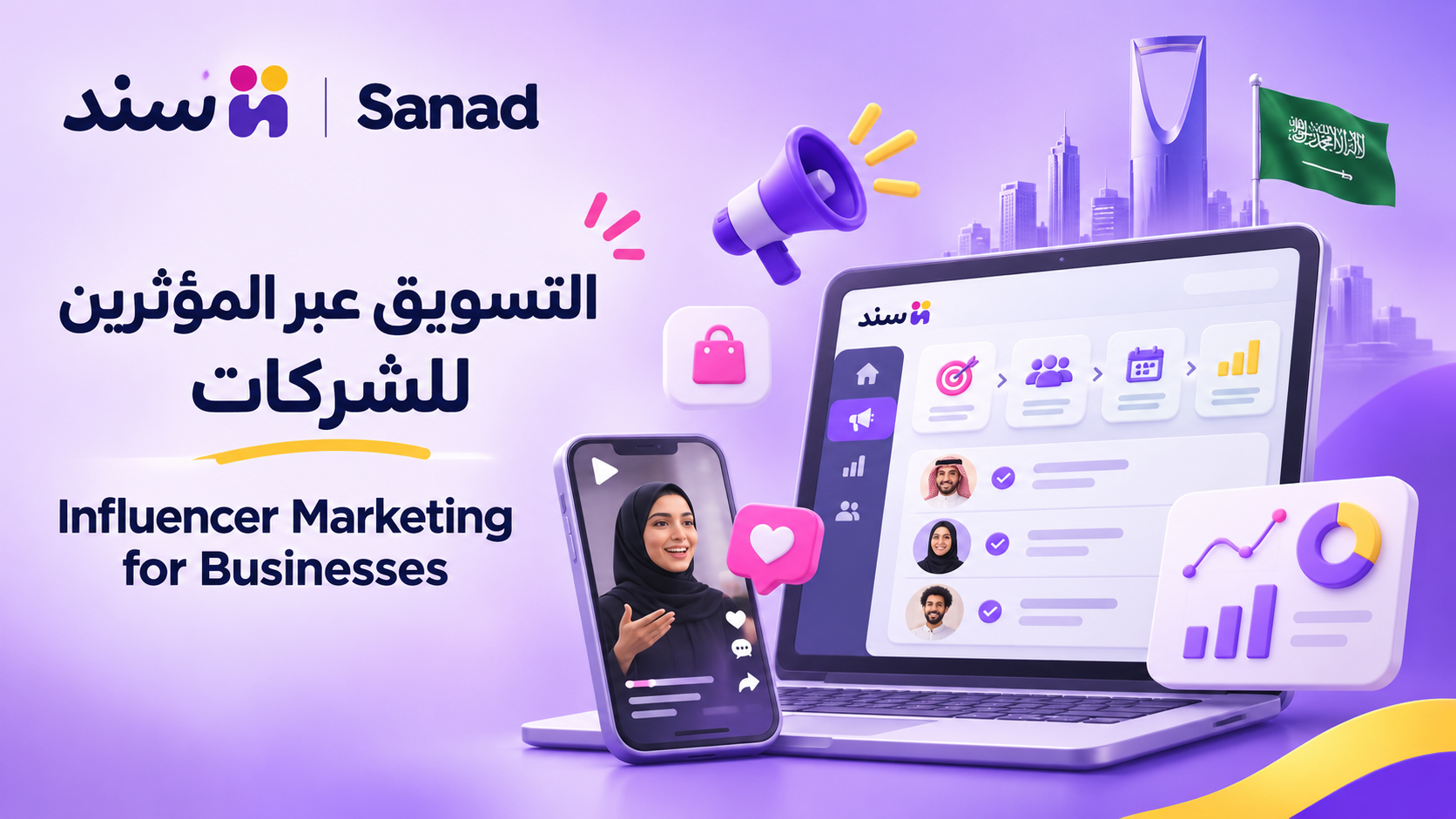
The Sanad platform helps businesses organize influencer marketing activities, from creator discovery to campaign monitoring.
Its capabilities include:
Creator Discovery: Arabic AI-powered search, audience and engagement data, growth indicators, and the Audience Quality Score (AQS).
Relationship Management: Organizing candidate lists, communications, and collaboration stages.
Campaign and Content Management: Following campaign tasks, creator posts, and content reviews.
Tracking and Measurement: Using tracking links and discount codes, and reviewing sales data and reports.
Start with a free consultation to discuss your store’s needs and understand how Sanad can help organize your campaigns.
Frequently asked questions
Sanad.All rights reserved.
Riyadh - Al Yasmin District - Anas Ibn Malik
To contact sales:info@getsanad.sa
commercial register:1009128803
Tax ID number:311767139100003