November 21, 2026
8 min
Influencer Campaign Management in Saudi Arabia: A Complete Guide
Written by Soholat SEO
You launched a campaign with three content creators. The first post went live three days late, the second content creator quoted the wrong discount code, and the third forgot the link entirely. Two weeks later, you cannot tell which of them sold anything.
That is the difference between hiring a content creator and managing a campaign. The result depends not only on whom you choose, but on how the campaign is run, from the first agreement to the final report.
This guide from Sanad Platform explains influencer campaign management in Saudi Arabia step by step: the stages, choosing content creators, the budget, measuring performance, and the mistakes that sink campaigns.
What Is Influencer Campaign Management?
Influencer campaign management is organizing a campaign from idea to result: choosing content creators, agreeing terms, reviewing content, tracking publication, and measuring impact.
It is different from buying a post from a content creator. A post is one decision, while managing influencer campaigns is a chain of connected decisions, each of which affects the next. When those decisions follow one plan, running influencer marketing campaigns becomes clearer and easier to track.
Why Is Influencer Campaign Management Important?
Because a campaign can fail after you have picked the right content creator, not before. A late post, a changed message, or a broken code is enough to waste weeks of work. Good management gives you four things:
Control of the message. Whatever is published under your brand’s name passes through your approval first.
Deadlines kept. Content arrives and goes live on time, so you do not miss the moment of your offer.
Spending under control. You know what you paid, what is left, and what produced results.
Decisions based on numbers. You know whom to keep working with and whom to stop working with.
Key Stages of Managing an Influencer Campaign
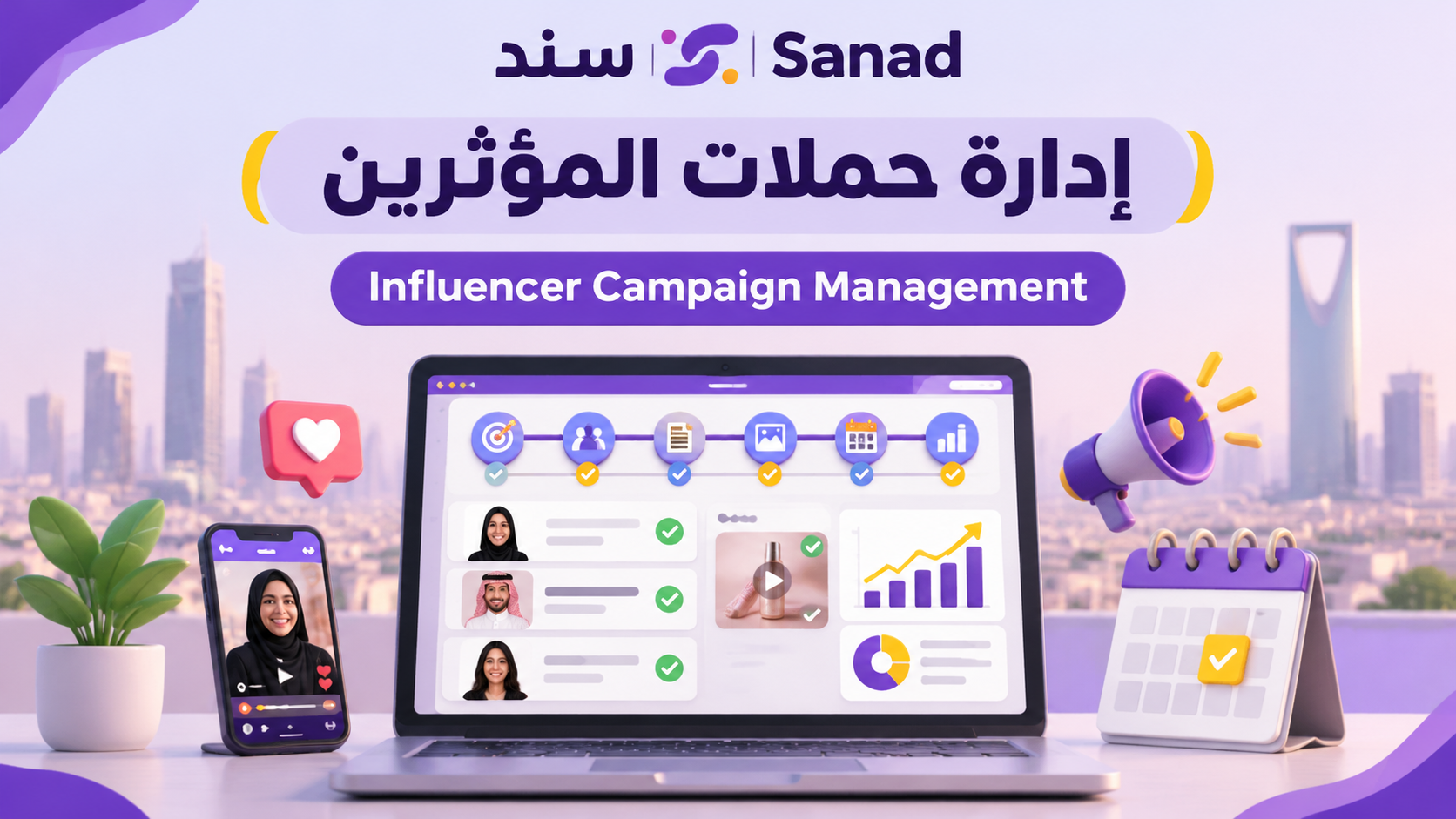
There are six stages, and each one ends with a clear output before you move to the next:
Planning. Set the goal, audience, platform, and duration. Output: one page that sums them up.
Selection. Choose content creators and check their audience and credibility. Output: a short list of three to five.
Agreement. Agree in writing on deliverables, deadlines, price, and usage rights. Output: a written agreement.
Brief and production. Send the campaign brief, receive the content, and approve it before it is published. Output: approved content.
Publishing and monitoring. Make sure posts go live on time, and watch the code, the link, and your stock. Output: a campaign running as planned.
Evaluation and improvement. Collect the numbers, compare content creators, and decide whom to keep. Output: decisions for the next campaign.
Also agree in advance, at the production stage, on the number of revision rounds and how long you will take to respond to each draft, so that publishing is not delayed.
Here is a hypothetical example: a Saudi skincare store runs a four-week campaign with three content creators.
Week | What happens |
|---|---|
First | Planning, selection, and agreement |
Second | Sending the brief, receiving and approving content |
Third | Publishing, and checking the code and stock daily |
Fourth | Evaluation, reposting the best content, and deciding whether to continue |
The brief is the summary that makes every content creator understand the task in the same way. Include:
The product and its two key features.
The main message, and what to mention and what to avoid.
The platform and the number of pieces of content required.
The delivery date and the publishing date.
The advertising disclosure.
The content creator’s own code and link.
Content usage rights, if you plan to reuse it in your ads.
How to Choose the Right Influencers
Choose content creators whose audience matches your customer and whom their followers trust, then check four things before you agree:
Audience. Ask for recent screenshots of their account analytics showing the audience’s cities and ages.
Engagement. Comments and questions about products, not repeated emojis.
Past content. Their style should suit your brand.
License and disclosure. Before entering into an advertising agreement, verify that the content creator holds the required Mawthooq license issued by the General Authority for Media Regulation. You can review the official Mawthooq licensing requirements and ensure that the creator complies with applicable advertising disclosure requirements.
Here is an example. A skincare store targets women in Riyadh and Jeddah. The right content creator is the one who reviews skincare products and whose audience is mostly in those two cities, not the one who posts travel content for an audience spread across many countries.
Start with a small test using three to five content creators before you expand the campaign. For more on selection criteria, see our article on how to choose the right influencer for your brand in Saudi Arabia.
How to Set an Influencer Campaign Budget
Start with an amount you can afford to lose in testing, then spend it in stages rather than all at once. These four rules make the budget part of campaign management:
Set a spending ceiling before you start, and exceed it only on the strength of results.
Split the amount into a testing stage and an expansion stage. Do not put everything behind the first content creator.
Tie payments to delivery. One payment at agreement, and another after the approved content is published.
Keep a reserve for urgent revisions or to back content that works.
For influencer rates in Saudi Arabia and a numbers-based breakdown of how to split the amount, see our article on the influencer marketing budget.
How to Measure Influencer Campaign Performance
Give each content creator a unique code and a dedicated link, then compare orders and cost across content creators. Measuring influencer campaign performance starts with knowing where each order came from.
While posts are live, check three things every day: orders per code, product stock, and the questions followers leave in the comments. Fix any problem the same day.
The right metrics depend on your goal:
For brand awareness: reach, views, store visits, and searches for your brand name.
For sales: orders, cost per order, and ROAS (sales ÷ campaign cost).
Here is a hypothetical example for the skincare campaign, with an average order of SAR 250:
Content creator | Cost (SAR) | Orders | Sales (SAR) | Cost per order (SAR) | ROAS |
|---|---|---|---|---|---|
A | 4,000 | 40 | 10,000 | 100 | 2.5 |
B | 3,000 | 15 | 3,750 | 200 | 1.25 |
C | 1,500 | 30 | 7,500 | 50 | 5 |
Total | 8,500 | 85 | 21,250 | 100 | 2.5 |
What do the numbers say? Content creator C has the lowest cost per order (SAR 50) and the highest ROAS, while content creator B is the weakest (SAR 200 per order). So you move part of the next campaign’s budget from B to C, and you test a content creator similar to C.
Remember that a code proves usage, not cause, and that ROAS alone is not enough, so compare it with your profit margin.
Common Influencer Campaign Management Mistakes
Starting without a single numeric goal.
Leaving the agreement verbal, or scattered across messages.
Publishing content without prior approval.
Launching before testing the code, the link, and the stock.
Checking the numbers only after the campaign instead of while it runs.
Comparing content creators by views rather than by orders and their cost.
Overlooking ad disclosure and failing to check the license.
How Sanad Platform Supports Influencer Campaign Management
Managing a campaign with several content creators means messages, deadlines, files, and numbers scattered across many places. That is where the Sanad platform comes in. It is a content creator marketing platform. You identify the right content creator for your store with AI and see their actual sales. It brings the stages of your campaign together in one place. It helps you in the following ways:
Creator discovery. Sanad provides advanced search tools to help you find the right creators for your brand through its creator discovery tools.
Content management. You can receive content from creators, review and approve it, and request revisions directly through the platform's content management system.
Discount codes and partnership links. These allow you to assign dedicated codes and links to each creator, making it easier to track orders and sales generated by the campaign.
Data and reporting. Accesscampaign reports and performance analytics to monitor results and make better campaign decisions.
Two ways to manage campaigns. Manage your campaigns yourself on the platform, or choose the managed service for an additional fee, and the Sanad platform team manages the campaign for you.
If you want to start with the approach that suits your campaign, get started and book a consultation with the Sanad platform team.
Frequently asked questions
Sanad.All rights reserved.
Riyadh - Al Yasmin District - Anas Ibn Malik
To contact sales:info@getsanad.sa
commercial register:1009128803
Tax ID number:311767139100003